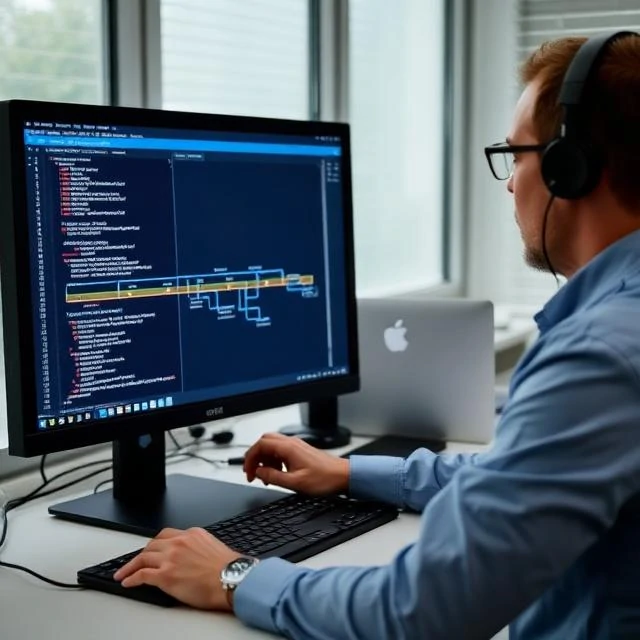
Raw sequencing data is not an answer. It is a file full of short reads. Turning that file into a list of genetic variants requires a series of computational steps. That series is a bioinformatics pipeline. Each step takes the output of the previous step, transforms it, and passes it on. The pipeline ends with something interpretable: a variant call, a gene expression profile, a taxonomic classification.
A typical pipeline for DNA sequencing has several stages. Quality control removes low-quality reads and adapters. Alignment maps the reads to a reference genome. Variant calling identifies positions where the sample differs from the reference. Annotation adds information about genes, regulatory elements, and known variants. Filtering removes likely false positives. Each stage has parameters that affect the result, and tuning them is part art, part science.
Pipelines must be reproducible. If a result cannot be reproduced, it cannot be trusted. Workflow management systems like Nextflow, Snakemake, and Galaxy track the steps, record the parameters, and package the environment. They make it possible to rerun an analysis months later and get the same answer. They also make it possible to share the analysis with collaborators.
The pipeline is not glamorous. It is plumbing. But without it, modern biology would drown in its own data.
Comments
No comments yet. Be the first to share a thought.
Leave a comment