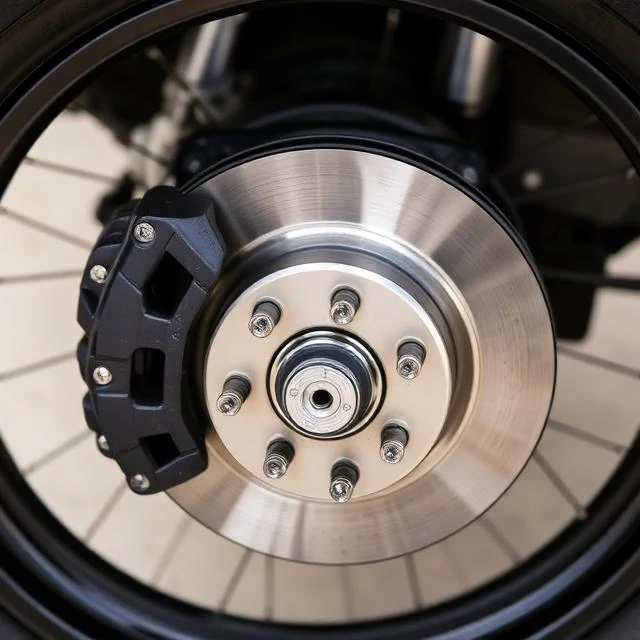
Brakes turn motion into heat. That is the whole trick. A moving car has kinetic energy, and stopping it means getting rid of that energy. Friction brakes press a stationary pad against a rotating disc or drum. The friction converts kinetic energy into heat, which dissipates into the air. Electromagnetic brakes, used in some hybrids and EVs, use magnetic fields to slow the car and recover energy as electricity.
Most cars use disc brakes at the front and either disc or drum brakes at the rear. A disc brake has a rotor, a caliper, and two pads. Hydraulic pressure pushes the caliper pistons, which squeeze the pads against the rotor. A drum brake has shoes that press outward against the inside of a rotating drum. Disc brakes cool better and are more consistent. Drum brakes are cheaper and can be more powerful at low speeds.
Brake performance depends on heat management. A single panic stop can heat a rotor to 500 degrees Celsius. Repeated hard stops can cause fade, where the brakes lose effectiveness as they overheat. Performance cars use vented or drilled rotors and high-temperature pads to resist fade. Regenerative braking in EVs reduces wear on friction brakes by using the motor to slow the car.
Brake fluid matters too. It is hygroscopic, meaning it absorbs water from the air. Over time, that water lowers the boiling point and can cause the brakes to fail. Most manufacturers recommend flushing the fluid every two to three years.
Comments
No comments yet. Be the first to share a thought.
Leave a comment