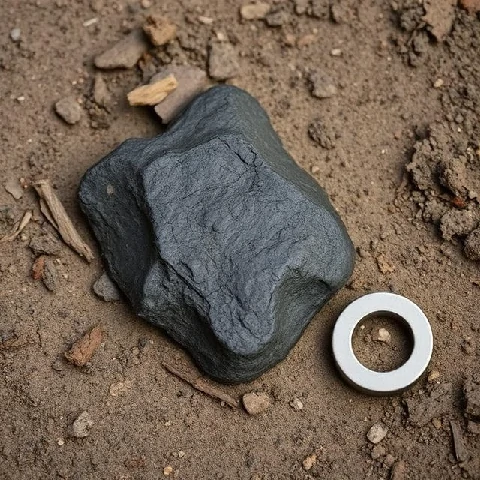
A meteorite is a piece of space rock that survives the fiery trip through Earth's atmosphere and lands on the ground. Most meteors burn up completely. The ones that make it are usually larger and denser, or they enter at a shallower angle and decelerate more gently. Once on the ground, a meteorite is no longer glowing. It is a cold, dark stone or a lump of iron.
Meteorites come in three main types. Stony meteorites are the most common, made mostly of silicate minerals. Iron meteorites are dense and metallic, composed of iron and nickel. Stony-iron meteorites are a mix of both, and they are the rarest. Each type carries information about the early solar system. Some contain tiny grains that predate the Sun itself.
Finding a meteorite is not easy. They look like ordinary rocks, though they often have a dark fusion crust and may attract a magnet. Antarctica is a prime hunting ground because the ice concentrates meteorites and preserves them. Scientists have collected tens of thousands there.
Meteorites matter because they are samples of other worlds. Some come from Mars. Some come from the Moon. Some come from asteroids we have never visited. They are free samples from the solar system.
Comments
No comments yet. Be the first to share a thought.
Leave a comment