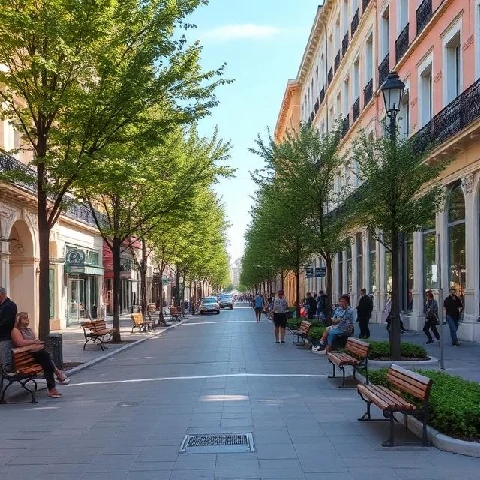
Urban design is the shaping of public spaces, streets, and neighborhoods at the scale of the city. It sits between architecture and urban planning. Architecture deals with individual buildings. Planning deals with land use and policy. Urban design deals with the spaces between buildings: the streets, squares, parks, and blocks that make up the public realm.
Urban designers think about how people move, how buildings meet the street, how public space is enclosed, and how a neighborhood feels. They consider scale, proportion, texture, and light. They also consider function: where people walk, where they sit, where they gather, where they park.
Good urban design is not about grand gestures. It is about the details that make a place work. A street with trees and wide sidewalks feels different from one without. A square with a fountain and seating attracts people. A block with active ground floors feels safer than one with blank walls.
Urban design is also a political process. It involves public input, developer interests, and government regulation. The best urban design is not imposed from above. It emerges from a conversation about what a community wants to be.
Comments (3)
Leave a comment