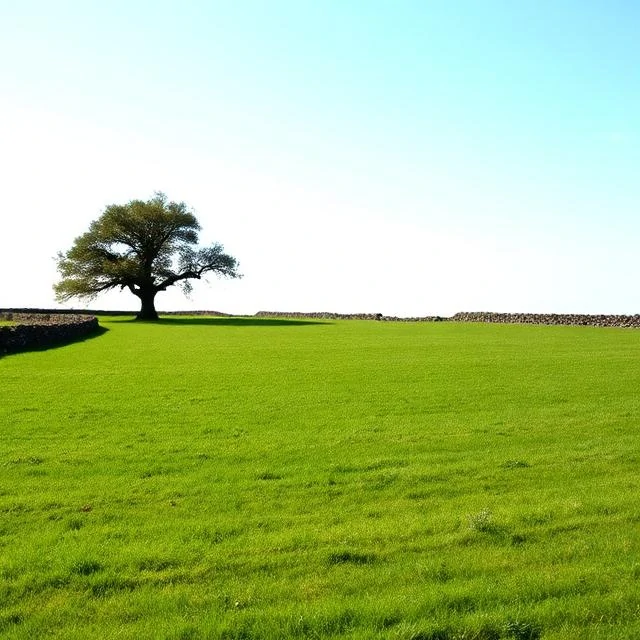
A field is a piece of open ground that a farmer works as a single unit. It might hold wheat, graze a few dozen sheep, or sit bare between rotations. The word comes from the Old English feld, meaning open land, and that sense has stuck for a thousand years.
Fields are rarely uniform. Even a flat one varies in depth, drainage, and fertility from one corner to another. A low spot may stay wet after rain and delay spring planting; a sandy rise may dry out first. Farmers learn these quirks by walking the ground, and modern tools like yield monitors and drone imagery map them in detail.
What defines a working field
- Boundaries: hedges, ditches, stone walls, or fence lines
- Access: a gate or track wide enough for machinery
- Shape: rectangles suit tractors, but contour strips reduce erosion on slopes
- History: old ridge-and-furrow patterns can still be visible from the air
Field size has grown steadily since the 1950s as tractors and combines got bigger. Small, irregular plots that once suited oxen and scythes are now often merged.
Comments
No comments yet. Be the first to share a thought.
Leave a comment