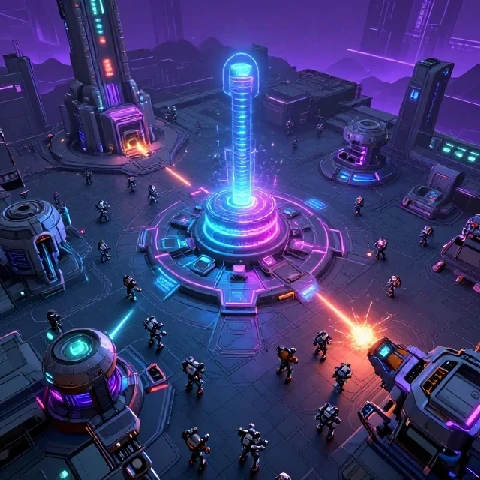
Real-time strategy games put players in continuous decision-making mode. Unlike turn-based titles where everyone waits their turn, an RTS keeps the clock running. Armies move, resources gather, and bases expand while the opponent does the same on the other side of the map.
The genre took shape in the early 1990s with titles that demanded quick thinking and multitasking. Players typically start with a handful of workers, collect minerals or wood, construct buildings, and train combat units. Victory often comes from superior economy, clever unit composition, or a well-timed attack that catches the enemy off guard.
Modern RTS titles still reward map control and scouting. A good player constantly shifts attention between production, army positioning, and expanding to new resource nodes. The best matches feel like a high-speed chess game played with tanks, dragons, or alien swarms instead of pieces on a board.
- Continuous action rather than alternating turns
- Resource gathering and base building as core loops
- Emphasis on multitasking and rapid adaptation
Comments
No comments yet. Be the first to share a thought.
Leave a comment