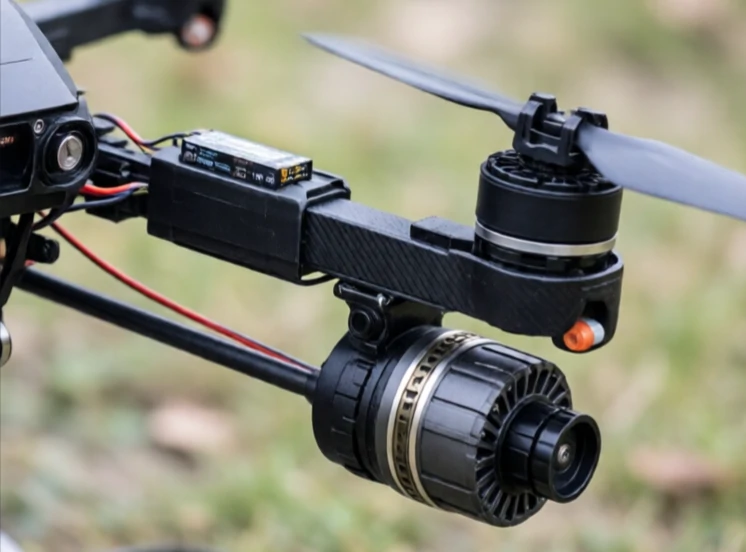
A direct current motor runs on DC electricity. Connect a battery and it spins. Reverse the polarity and it spins the other way. That simplicity made DC motors the first practical electric motors and keeps them in everything from toys to robot joints.
The brushed DC motor uses a mechanical commutator to switch current direction in the windings. It is cheap and easy to control but wears out. The brushless DC motor replaces the commutator with electronic switching. It lasts longer, runs cooler, and produces more torque per size. Brushless motors dominate modern robotics, drones, and electric vehicles.
DC motor characteristics
- Speed proportional to voltage.
- Torque proportional to current.
- Brushed motors: simple, cheap, maintenance-prone.
- Brushless motors: efficient, durable, need a controller.
- Gearboxes trade speed for torque.
Control is straightforward. Pulse width modulation varies the average voltage to set speed. An H-bridge allows direction reversal. Encoders provide position feedback for closed-loop control. The DC motor is not glamorous, but it is the workhorse of motion. Every robot joint, every conveyor belt, every electric window in a car relies on one. Understanding how it works is foundational for anyone building machines that move.
Comments
No comments yet. Be the first to share a thought.
Leave a comment