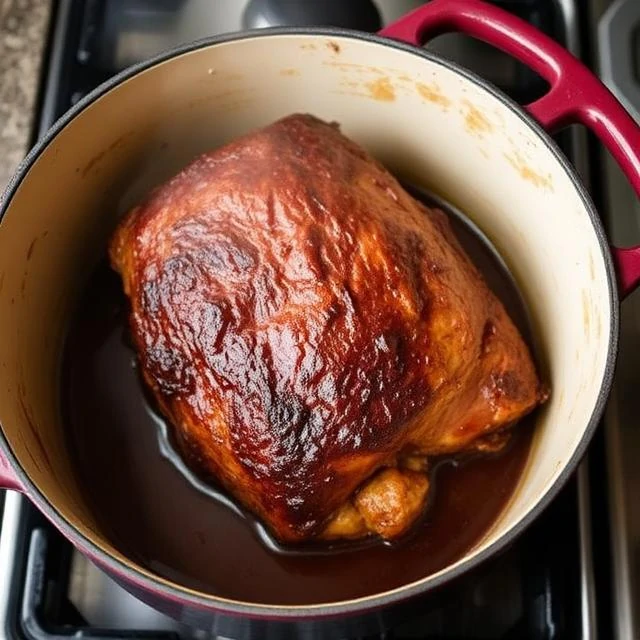
Braising cooks food slowly in a covered pot with liquid after searing. The food is first browned in hot fat, which develops flavor and color. Then liquid is added, the pot is covered, and the food simmers for hours. The low, moist heat breaks down collagen and connective tissue, turning tough cuts into tender, rich dishes. Pot roast, coq au vin, and osso buco are classic braises. The method is old. The result is deep.
Braising works because of collagen. Tough cuts of meat, like chuck, shank, and shoulder, are full of connective tissue. Dry heat makes them tough. Moist heat, applied slowly, converts collagen into gelatin. The meat becomes fork-tender. The liquid becomes a sauce. The vegetables, if included, absorb the flavors. The pot is the environment. The lid traps the steam. The low heat does the work. The cook waits.
Braising has several keys. The sear must be hot and fast, to brown the surface without cooking the interior. The liquid should come about halfway up the food, not cover it. The pot should be heavy and tight-fitting. The oven temperature should be low, around 150 to 160 degrees Celsius. The cooking time depends on the size and the cut. A small braise takes an hour. A large one takes four. The result is not fast. It is not flashy. It is deeply flavored and profoundly satisfying. The braise is a lesson in patience. The cook who learns it eats well.
Comments (3)
Leave a comment