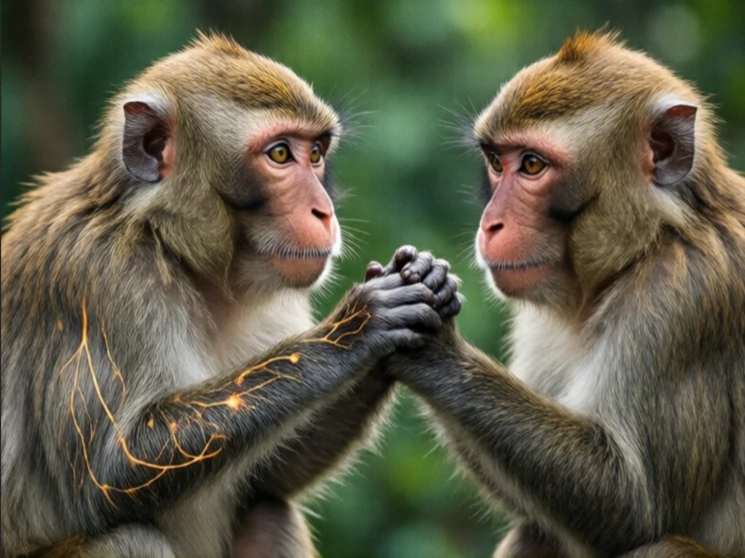
Mirror neurons are cells that fire both when an individual performs an action and when the individual observes someone else performing the same or a similar action. They were first identified in the premotor cortex of monkeys and have since been inferred in humans through neuroimaging and other methods.
The discovery suggested a neural basis for understanding the actions of others by mapping them onto one’s own motor system. When a monkey grasps an object, certain neurons discharge; the same neurons discharge when the monkey watches another grasp. In humans, similar resonance systems are thought to contribute to imitation, empathy, and the comprehension of intentions. The precise extent and function of mirror-neuron systems remain topics of active research and debate.
Some theorists have linked mirror neurons to the evolution of language and social cognition. Others caution that the human evidence is more indirect than the original monkey recordings and that many cognitive processes contribute to action understanding.
When watching another person act activates some of the same neural machinery used to act oneself, mirror neurons are part of the explanation.
Comments
No comments yet. Be the first to share a thought.
Leave a comment