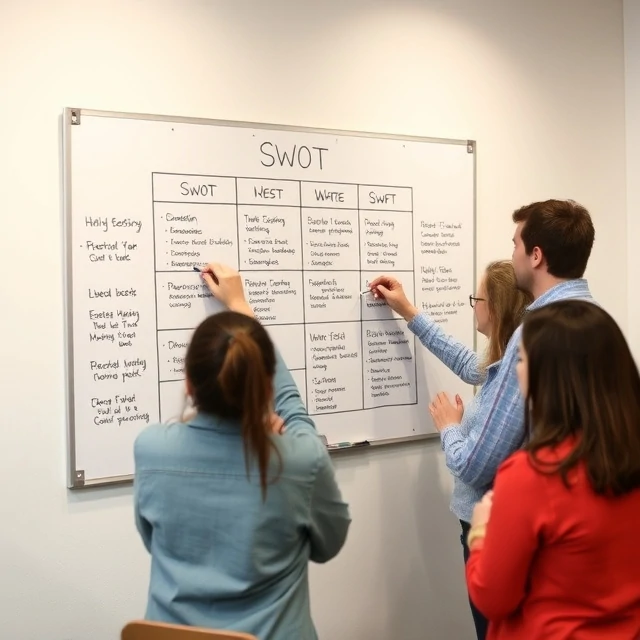
A simple grid can organize strategic thinking. SWOT analysis examines a company’s or a project’s Strengths, Weaknesses, Opportunities, and Threats. Strengths and weaknesses are internal; opportunities and threats are external. The exercise forces a structured look at both what the organization controls and what it must respond to.
SWOT is widely taught and widely used because it is easy to understand and to facilitate in a group. Its value depends on the honesty and insight of the participants. Vague or generic entries produce little guidance. Specific, evidence-based entries can highlight priorities and strategic options.
The framework does not itself generate strategy; it organizes information that can inform strategy. Combining SWOT with other tools—competitive analysis, resource assessment, scenario planning—produces a richer picture. Despite its age and simplicity, SWOT remains a practical starting point for many planning conversations.
Comments
No comments yet. Be the first to share a thought.
Leave a comment