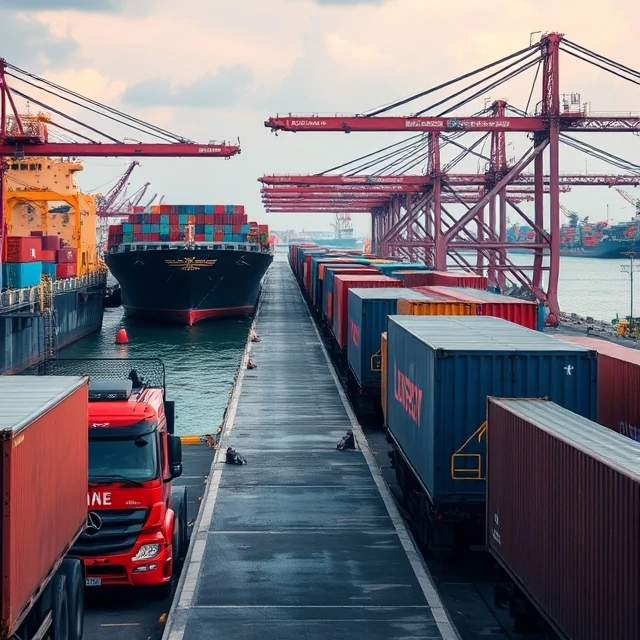
Before standardized boxes, cargo was loaded piece by piece. Containerization is the practice of packing goods into intermodal containers so that the same sealed unit can travel by sea, rail, and road without intermediate unloading.
The system slashed port labor, reduced theft and damage, and enabled the growth of global supply chains. Vessel designs, terminal equipment, and inland transport networks all adapted to container dimensions and weights. Transit times fell and schedule reliability improved.
Not every commodity suits containerization; bulk and oversized project cargo still move by other means. For the majority of manufactured goods, however, containerization remains the dominant method of international transport. The standard itself continues to evolve with larger vessels and higher stacking requirements.
- Use of standardized containers for multimodal transport
- Eliminates intermediate cargo handling
- Reduced cost, damage, and transit time
- Foundation of modern global trade logistics
Comments
No comments yet. Be the first to share a thought.
Leave a comment