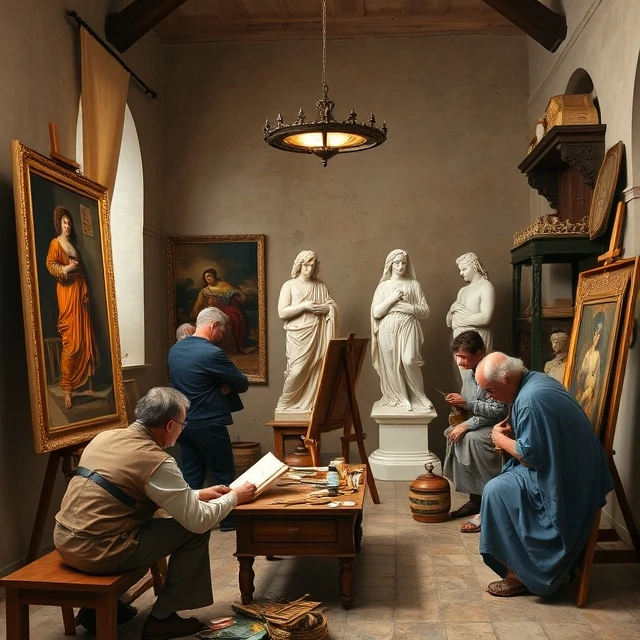
From the fourteenth century onward, artists and scholars in Italian cities and then across Europe looked to classical antiquity with renewed intensity. The Renaissance was a cultural and intellectual movement characterized by humanism, artistic innovation, and a confident engagement with the material world.
Painting, sculpture, and architecture achieved new naturalism and technical mastery. Humanist education emphasized classical languages and moral philosophy. Scientific observation and political thought also flourished in the same milieu. The movement coincided with the recovery of ancient texts, the invention of printing, and the early overseas voyages.
Later historians debated how sharp the break with the Middle Ages really was. Regional Renaissances differed in timing and emphasis. The period nevertheless left an enduring ideal of cultivated individuality and artistic excellence that shaped European self-understanding for centuries.
- Cultural movement beginning in 14th-century Italy
- Emphasized classical learning and artistic naturalism
- Spread across Europe with local variations
- Linked to humanism, printing, and exploration
Comments
No comments yet. Be the first to share a thought.
Leave a comment