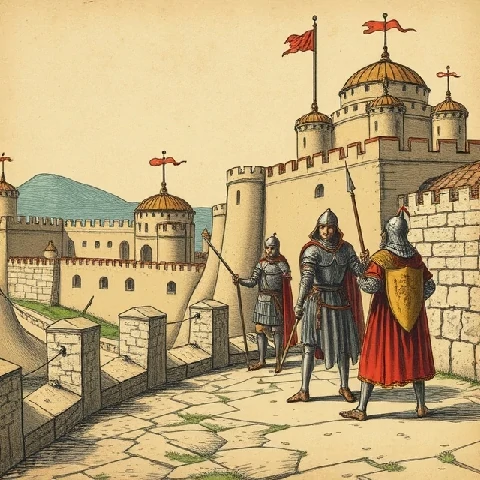
In 1095 a papal appeal launched armed pilgrimages toward the eastern Mediterranean. The Crusades were a series of military campaigns, mainly between the late eleventh and thirteenth centuries, in which western European Christians sought to capture or defend holy sites in the Near East and occasionally to attack other targets.
Motives mixed religious devotion, papal politics, knightly ambition, and economic opportunity. Crusader states were established along the Levantine coast and later lost. Parallel campaigns occurred in Iberia, the Baltic, and against Christian heretics in Europe itself.
Chronicles from Latin, Arabic, and Byzantine authors record the violence, cultural contact, and mutual stereotypes the expeditions produced. Modern historians debate the relative weight of piety and materialism and the long-term effects on Christian–Muslim relations. The term itself has been extended metaphorically to later conflicts, sometimes obscuring the specific medieval phenomenon.
- Medieval Christian military campaigns to the Near East
- Combined religious and worldly motives
- Established temporary crusader states
- Documented by multiple cultural traditions
Comments
No comments yet. Be the first to share a thought.
Leave a comment