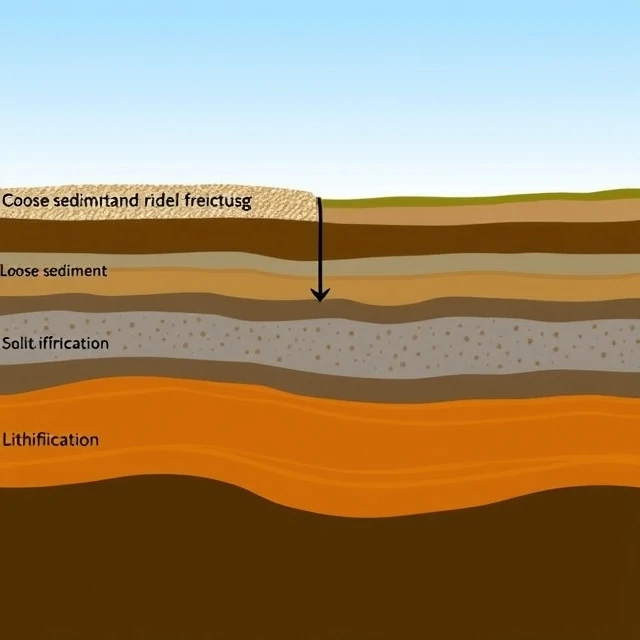
Loose sediment does not remain loose forever. Lithification is the process that converts sediment into solid sedimentary rock through compaction and cementation. Overburden pressure squeezes out water and packs grains closer; minerals precipitated from pore waters bind the grains together.
Common cements include calcite, quartz, and iron oxides. The degree of lithification determines the rock’s strength and porosity. Mud becomes shale or mudstone; sand becomes sandstone; gravel becomes conglomerate. The process can take thousands to millions of years depending on depth, temperature, and chemistry.
Lithification is a key step in the rock cycle that locks sedimentary particles into the geologic record. Incomplete lithification leaves sediments that can still host groundwater or hydrocarbons. Understanding the process helps predict reservoir quality and the preservation of fossils and sedimentary structures.
- Conversion of sediment into sedimentary rock
- Involves compaction and cementation
- Produces sandstone, shale, limestone, and related rocks
- Critical step in the rock cycle
Comments
No comments yet. Be the first to share a thought.
Leave a comment