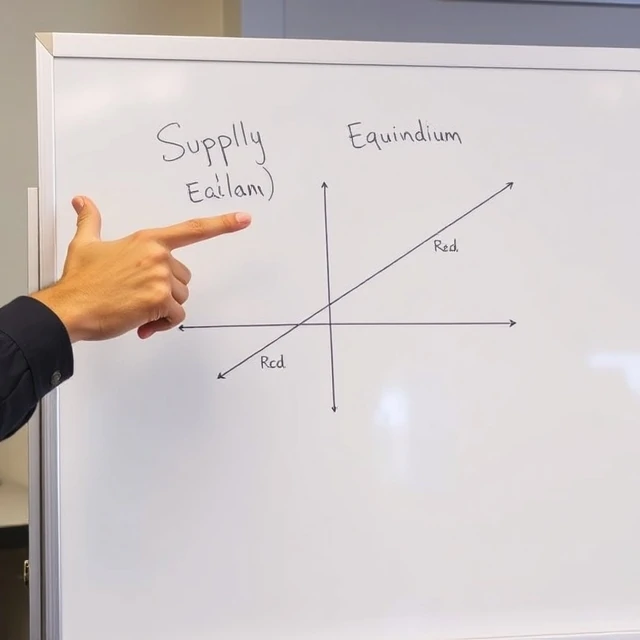
Equilibrium is the point where supply meets demand. At a given price, the quantity producers want to sell equals the quantity consumers want to buy. There is no shortage. There is no surplus. The market clears.
In theory, markets tend toward equilibrium through price adjustments. If prices are too high, unsold goods pile up and sellers cut prices. If prices are too low, shelves empty and buyers bid prices up. The process is rarely smooth. Real markets have frictions, delays, and imperfect information.
Equilibrium is a moving target. It shifts when demand changes, when supply changes, or when both move at once. A new competitor, a technology shift, or a change in consumer tastes all push the equilibrium price and quantity to new levels. Economists use the concept as a benchmark, not a description of reality.
Key ideas
- Equilibrium price: where supply equals demand
- Surplus: quantity supplied exceeds demanded
- Shortage: quantity demanded exceeds supplied
- Shifts vs. movements along curves
- Market-clearing price
Comments
No comments yet. Be the first to share a thought.
Leave a comment