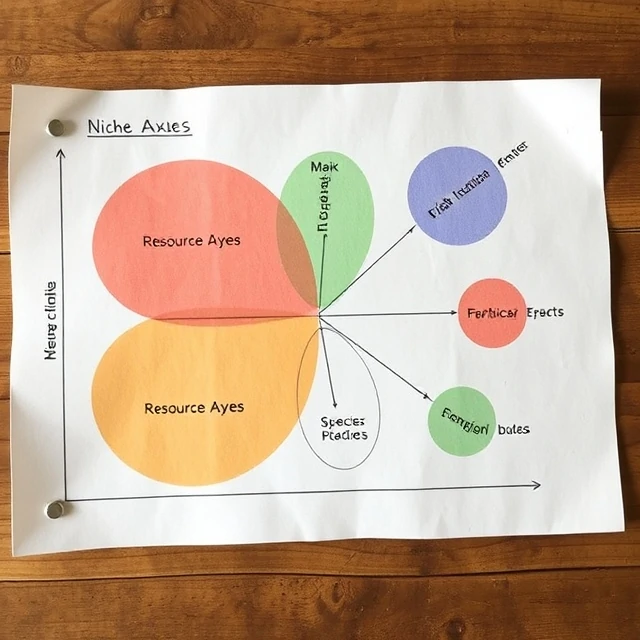
An organism's niche is its role and position in an ecosystem. It includes what it eats, what eats it, where it lives, when it is active, and how it interacts with other species. The niche is not the same as the habitat. The habitat is the address. The niche is the job. Two species can live in the same habitat if they occupy different niches. Warblers in a spruce forest feed at different heights, reducing competition. That partitioning allows several species to share the same trees.
The niche concept has been refined over decades. Early ecologists described the fundamental niche, the full range of conditions a species could tolerate. The realized niche is the narrower range it actually occupies because of competition and predators. Invasive species often succeed because they enter a new environment where their niche is unfilled. They face no competitors or predators that evolved alongside them. Restoring an ecosystem sometimes means restoring niches, not just species. A missing predator leaves a gap that no other species fills.
Dimensions of a niche
- Diet: what the species eats.
- Habitat: where it lives and shelters.
- Activity: when it is active.
- Interactions: predators, competitors, mutualists.
The niche is not a fixed box. It shifts with conditions, seasons, and the arrival or loss of other species.
Comments (3)
Leave a comment