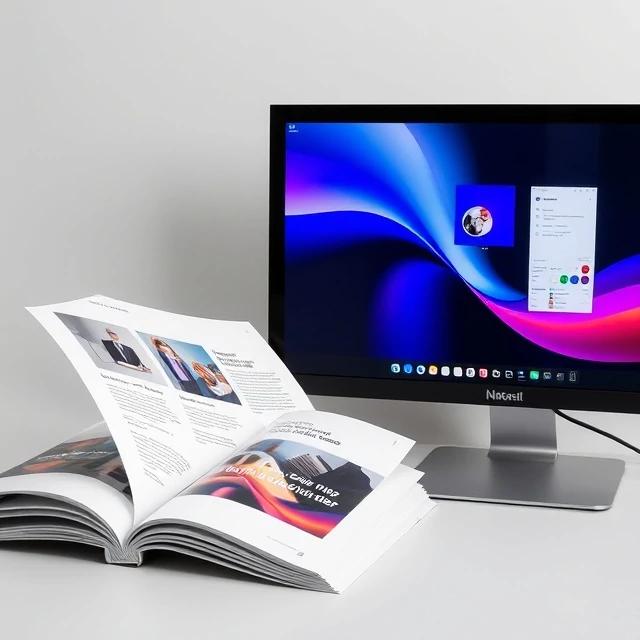
Printers do not mix light. They mix ink. CMYK is the subtractive color model used in commercial printing, named for its four inks: cyan, magenta, yellow, and key, which is black. Each ink absorbs, or subtracts, certain wavelengths of light and reflects others. Cyan absorbs red, magenta absorbs green, yellow absorbs blue. Layering them produces a wide range of colors. Black is added because mixing the three colors alone produces a muddy brown, not a true black, and because black ink is cheaper than colored ink for text.
CMYK differs from RGB, the additive model used by screens. RGB starts with black and adds light to create color. CMYK starts with white paper and subtracts light by adding ink. The two models have different gamuts. RGB can display more saturated colors than CMYK can print. This is why a vivid on-screen design may print dull. Designers converting between the two often see bright blues and greens lose intensity. Color management tools help, but some loss is unavoidable.
Key points
- Cyan, magenta, yellow, and black inks.
- Subtractive: ink absorbs light.
- Used for commercial printing.
- Smaller gamut than RGB.
When preparing files for print, designers work in CMYK from the start. Converting from RGB at the last minute can produce surprises on press.
Comments
No comments yet. Be the first to share a thought.
Leave a comment