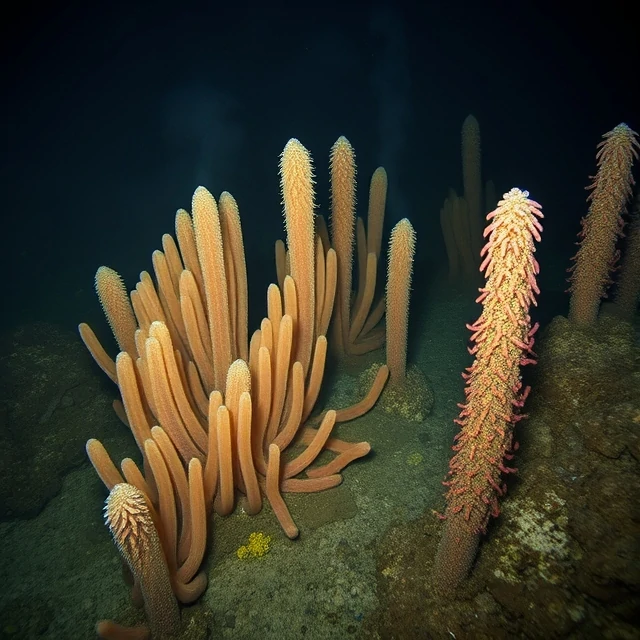
The biosphere is the global sum of all ecosystems where life exists. It stretches from the deepest ocean trenches to the lower atmosphere, from polar ice to hot springs. The term was coined by geologist Eduard Suess in 1875 and popularized by Vladimir Vernadsky, who argued that living organisms shape the planet's chemistry as much as geology does. The biosphere is not just a place. It is a system. Organisms take in nutrients, release gases, and modify the soil, water, and air around them.
Earth is the only planet known to host a biosphere. Its boundaries are set by conditions life can tolerate: temperature, pressure, water, and radiation. Beyond those limits, life stops. Within them, it thrives in extraordinary forms. Bacteria live in rocks kilometers underground. Tube worms cluster around hydrothermal vents. Lichens survive on Antarctic rock. The biosphere interacts with the atmosphere, hydrosphere, and geosphere. Carbon cycles through all four. So does nitrogen, phosphorus, and water.
Components of Earth's systems
- Biosphere: all living organisms.
- Atmosphere: the gases surrounding the planet.
- Hydrosphere: all water, liquid, ice, and vapor.
- Geosphere: rocks, minerals, and Earth's interior.
The biosphere is ancient, roughly 3.7 billion years old, and it has changed the planet repeatedly. Oxygen filled the atmosphere because of photosynthesis. Life does not just adapt to Earth. It remakes it.
Comments
No comments yet. Be the first to share a thought.
Leave a comment