Homo sapiens is the modern human species, originating in Africa around 300,000 years ago. The oldest known fossils come from Jebel Irhoud in Morocco, though the story is still being written. By about 60,000 to 70,000 years ago, groups had left Africa and spread across Eurasia, Australia, and eventually the Americas. Along the way, they interbred with Neanderthals and Denisovans, leaving traces in the DNA of many living people.
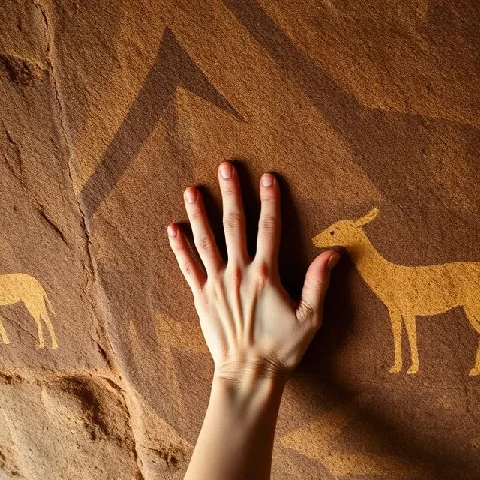
What sets Homo sapiens apart is not one single trait. It is a combination: a large brain, complex language, symbolic thought, and an extraordinary capacity for cooperation in large groups. Cave art, burial rituals, and long-distance trade networks appear in the archaeological record. So do tools made from bone, shell, and antler, and pigments used for body decoration.
Distinctive traits
- Large brain relative to body size.
- Fully modern skeleton and skull shape.
- Symbolic behavior: art, ritual, ornamentation.
- Ability to adapt to nearly every environment on Earth.
We are the only surviving hominin species, but for most of our existence, we shared the planet with others.
Comments (2)
Leave a comment