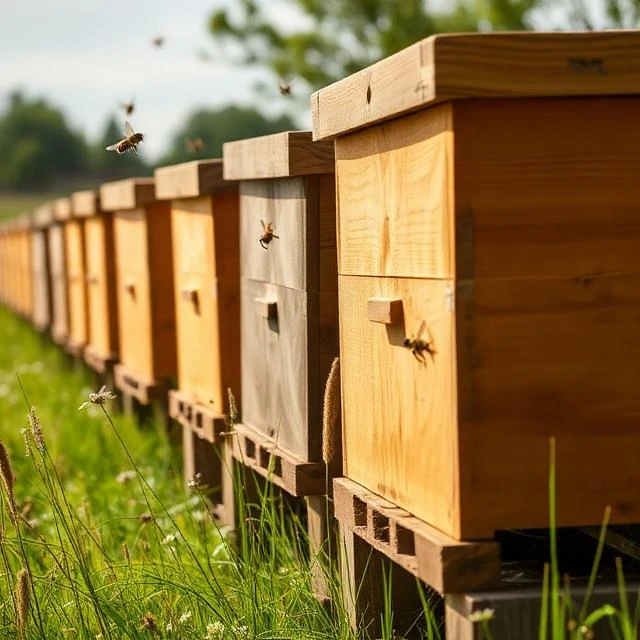
A hive is where a honey bee colony lives. Wild colonies nest in hollow trees, rock crevices, or wall cavities. Domestic hives are boxes built to be opened, inspected, and harvested without destroying the colony.
Traditional hives, like woven skeps and clay cylinders, forced beekeepers to kill the bees to get the honey. The movable-frame hive, patented by Lorenzo Langstroth in 1852, changed that. Frames hang with a precise gap, the bee space, that bees leave open rather than filling with propolis. A beekeeper can lift a frame out, check for disease, and slide it back with minimal disruption.
Parts of a modern hive
- Bottom board and entrance reducer
- Brood chamber where the queen lays
- Supers for honey storage, stacked above
- Frames with wax foundation the bees draw out
Inside, workers keep the brood at about 35°C, fanning in summer and clustering in winter. A strong colony can hold 60,000 bees at peak season and produce 30 kilograms of surplus honey in a good year.
Comments
No comments yet. Be the first to share a thought.
Leave a comment