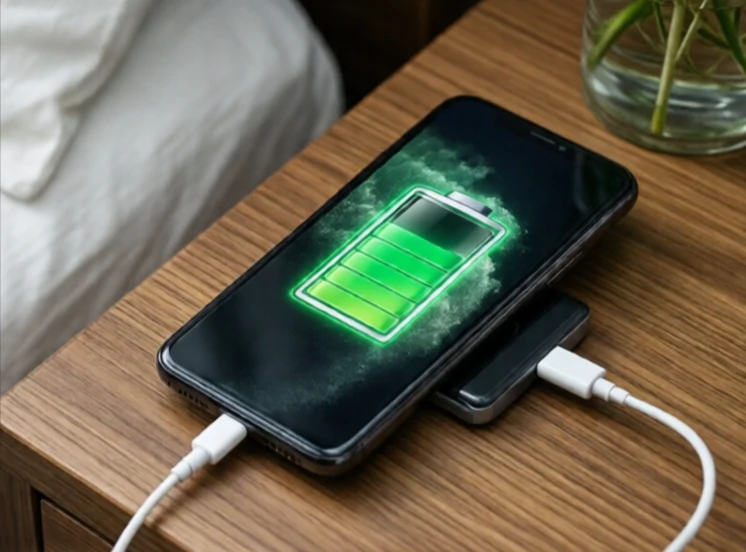
Every phone, laptop, and electric car carries a battery. It is a device that stores chemical energy and delivers it as electricity. When you plug in to charge, the chemical reaction reverses. When you unplug, it runs forward again, pushing electrons through a circuit.
Alessandro Volta built the first true battery in 1800, a stack of copper and zinc discs separated by brine-soaked cloth. Today's lithium-ion batteries power everything from earbuds to electric buses. They store more energy per kilogram than older chemistries and can handle thousands of charge cycles.
Key metrics
- Capacity: how much energy it holds, in watt-hours
- Voltage: the electrical pressure it provides
- Cycle life: how many charges before it degrades
- C-rate: how fast it can charge or discharge
Batteries are the bottleneck for renewable energy and electric transport. Solar and wind farms need storage for calm nights. Fast charging still wears cells down. Researchers are testing solid-state, sodium-ion, and other chemistries to push past lithium's limits.
Comments
No comments yet. Be the first to share a thought.
Leave a comment