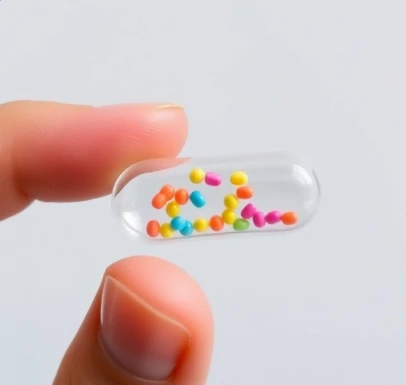
Some drugs taste terrible. Some irritate the stomach. Some need to release slowly over hours. A capsule solves all three problems. It is a shell, usually made of gelatin or cellulose, that holds a measured dose of powder, granules, or liquid. Swallow it and the shell dissolves, releasing the contents at the right place and time.
Hard capsules come in standard sizes, from 000 down to 5, and are filled with powder or tiny pellets. The pellets can be coated to release drug at different rates, which is how a single capsule can provide both immediate and extended release. Soft capsules hold liquids or suspensions, often oils or dissolved drugs. They are sealed as one piece, while hard capsules are two halves that fit together. Vegetarian capsules use plant-based cellulose instead of gelatin, which matters for some patients and cultures.
Why a capsule instead of a tablet:
- Taste masking. The shell hides bitter or unpleasant drugs.
- Release control. Pellets and coatings can time the release.
- Flexibility. Different fill weights are easier to accommodate.
- Powder delivery. Some drugs cannot be compressed into a stable tablet.
Capsules should be stored away from heat and moisture. A humid bathroom can make them sticky or soft.
Comments
No comments yet. Be the first to share a thought.
Leave a comment