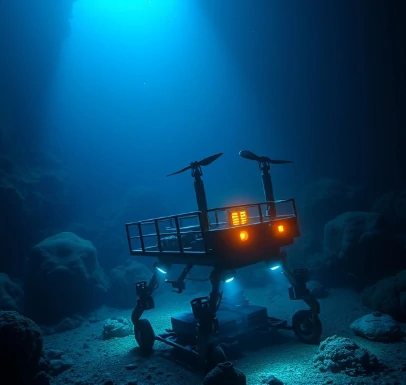
A remotely operated vehicle, or ROV, is an underwater robot controlled from a surface ship. A tether carries power, commands, and video. The pilot sits at a console and steers the vehicle with joysticks. ROVs work in water too deep or too dangerous for divers.
The first ROVs were built for military and offshore oil work in the 1960s and 1970s. They inspected pipelines, recovered torpedoes, and repaired wellheads. Today, ROVs are essential in offshore energy, scientific research, and search and rescue. They range from small observation units the size of a suitcase to work-class vehicles that weigh several tons and carry multiple manipulators.
ROV components
- Frame: protects components from pressure and impact.
- Thrusters: electric or hydraulic, for propulsion.
- Cameras and lights: for pilot vision.
- Manipulators: for grabbing and cutting.
- Tether: power and data link to the surface.
The tether is both a lifeline and a limitation. It provides unlimited power and real-time control, but it also creates drag and can snag on structures. Pilots train for hours to maneuver in currents and low visibility. Work-class ROVs can cost millions of dollars and require a crew of several people to operate. They are the workhorses of subsea inspection, maintenance, and repair. Autonomous underwater vehicles are taking over some survey tasks, but ROVs remain essential when a human needs to see and manipulate something in real time. The deep ocean is dark, cold, and under pressure. The ROV is how we work there.
Comments
No comments yet. Be the first to share a thought.
Leave a comment