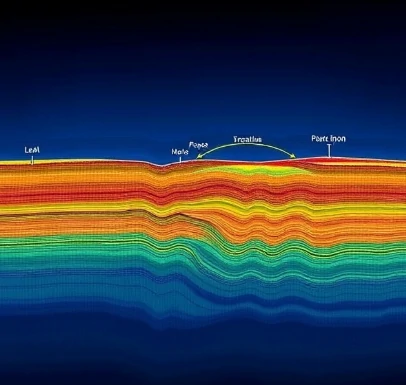
The seafloor records the history of plate tectonics, sediment supply, sea-level change, and climate. Marine geology is the discipline that reads that record. It examines the composition, structure, and evolution of the ocean basins and their margins.
Tools include multibeam sonar, seismic reflection profiling, sediment coring, dredging, and submersible observation. Major topics range from the birth of oceanic crust at mid-ocean ridges to its destruction in subduction zones, the growth of continental margins, and the deposition of sediments that archive past ocean conditions. Hydrothermal systems, submarine landslides, and gas hydrates are active research frontiers.
Marine geological knowledge underpins the search for hydrocarbons and minerals, the assessment of geohazards such as tsunamis and slope failures, and the interpretation of paleoclimate from marine sediments. The field has been transformed by the ability to map the seafloor in high resolution and to recover long sediment cores from remote locations.
- Study of seafloor structure and history
- Uses sonar, seismic, and sampling methods
- Reveals plate-tectonic and climate records
- Informs resource and hazard assessment
Comments
No comments yet. Be the first to share a thought.
Leave a comment