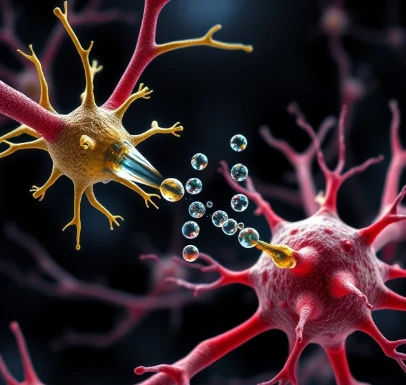
GABA, or gamma-aminobutyric acid, is the primary inhibitory neurotransmitter in the adult mammalian brain. It reduces the likelihood that a neuron will fire, thereby calming neural activity.
GABA is synthesized from glutamate and acts at two main receptor types. GABA-A receptors are ion channels that allow chloride ions to enter the cell, hyperpolarizing it; GABA-B receptors are metabotropic and produce longer-lasting inhibition. Many sedative, anxiolytic, and anticonvulsant drugs enhance GABA activity. Benzodiazepines increase the frequency of channel opening; barbiturates prolong the opening; alcohol also potentiates GABA-A receptors. The result is reduced anxiety, muscle relaxation, sedation, and, at high doses, suppression of vital functions.
Insufficient GABAergic inhibition is linked to epilepsy, anxiety disorders, and certain forms of insomnia. Too much inhibition produces drowsiness and impaired coordination. The balance between GABA and the excitatory transmitter glutamate is fundamental to the stability of neural circuits.
When the brain needs to quiet excessive activity, GABA is the main chemical brake.
Comments (2)
Leave a comment