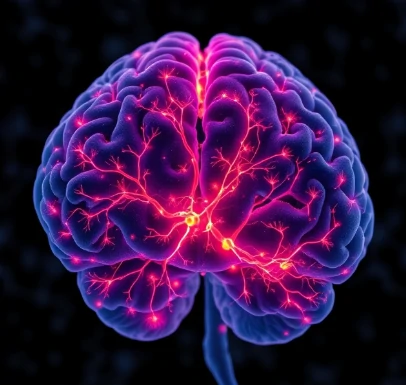
Dopamine is a neurotransmitter that plays central roles in reward, motivation, movement, and certain aspects of cognition. It is produced by several small groups of neurons whose axons reach widely through the brain.
In the nigrostriatal pathway dopamine supports fluid voluntary movement; its loss produces the tremor, rigidity, and difficulty initiating movement seen in Parkinson’s disease. In the mesolimbic pathway it signals the prediction and receipt of reward, energizing approach behavior and reinforcing learning. Drugs of abuse elevate dopamine signaling in this system, contributing to their addictive power. The mesocortical pathway influences attention, working memory, and executive function; imbalances here are implicated in schizophrenia and attention disorders.
Dopamine does not simply produce pleasure. It is more closely tied to the wanting and the effort that precede reward than to the liking that follows. Medications that increase or decrease dopamine activity are used for Parkinson’s, certain psychiatric conditions, and, more controversially, for enhancing focus.
When motivation surges or movement becomes effortless, dopamine is usually part of the story.
Comments
No comments yet. Be the first to share a thought.
Leave a comment