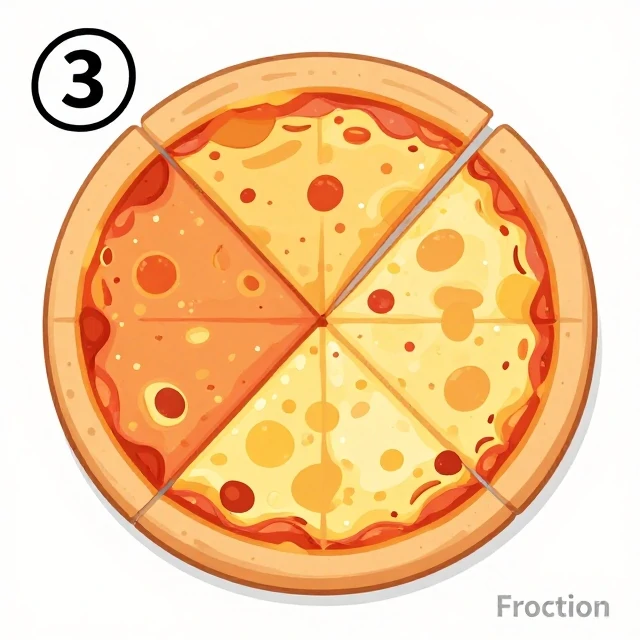
The numerator is the top number in a fraction. It tells how many parts are taken. In 3/4, the numerator is 3. The denominator is 4. The fraction means three out of four equal parts. The numerator counts. The denominator names.
The word comes from the Latin numerare, to count. The numerator counts the parts. The denominator tells what kind of parts they are. Fourths, fifths, sixteenths. The numerator is the how many. The denominator is the what kind.
Numerator in operations
- Adding fractions: numerators add when denominators match.
- Subtracting fractions: numerators subtract when denominators match.
- Multiplying fractions: numerators multiply.
- Dividing fractions: multiply by the reciprocal.
- Simplifying: divide numerator and denominator by the same factor.
The numerator is the active part of the fraction. It is the number you manipulate. The denominator is the constraint. You cannot add numerators until the denominators match. You cannot compare fractions until the denominators match. But once they do, the numerator does the work. 2/7 + 3/7 = 5/7. The numerators add. The denominator stays. In algebra, the same rules apply. Rational expressions have numerators that are polynomials. You factor them to simplify. You find common denominators to add them. The numerator is the focus of most fraction operations. It is the number that changes. The denominator is the background. It defines the units. The numerator counts them.
Comments
No comments yet. Be the first to share a thought.
Leave a comment