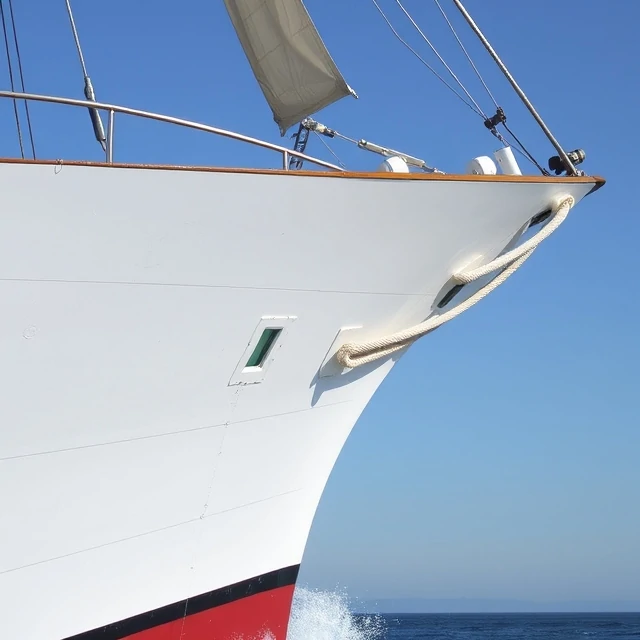
Reserve buoyancy keeps a ship from being swallowed by waves. Freeboard is the vertical distance from the waterline to the upper deck edge, representing the height of the hull above the water.
Minimum freeboard is set by the load line rules and varies with ship type, length, and the seasonal zone in which it operates. Greater freeboard improves seaworthiness in heavy weather but reduces cargo capacity for a given hull. The Plimsoll mark on the hull shows the maximum permitted immersion.
Officers ensure that freeboard remains adequate throughout the voyage as fuel is consumed and ballast changes. Reduced freeboard from overloading or from damage can lead to deck edge immersion and progressive flooding. Freeboard is therefore both a regulatory limit and a practical safety margin.
- Height of the deck above the waterline
- Represents reserve buoyancy
- Regulated by load line rules
- Critical to heavy-weather safety
Comments
No comments yet. Be the first to share a thought.
Leave a comment