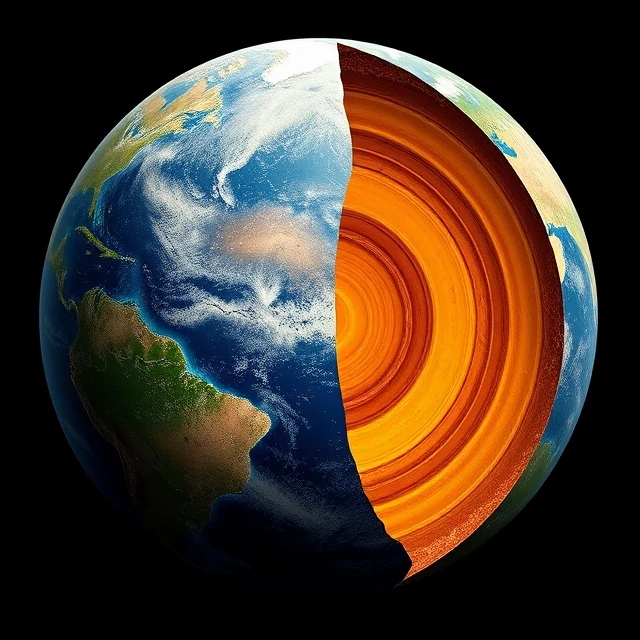
The outermost skin of the solid Earth is thin compared with what lies beneath. Earth’s crust is the rigid rocky layer that forms the continents and ocean floors. Continental crust is thicker and less dense, averaging 30–50 km; oceanic crust is thinner, denser, and typically 5–10 km thick.
Composition differs as well. Continental crust is broadly granitic, rich in silica and aluminum. Oceanic crust is basaltic, richer in iron and magnesium. The Mohorovičić discontinuity marks the base of the crust where seismic velocities increase into the mantle.
Virtually all human activity occurs on or within the crust. It hosts the mineral resources, aquifers, and soils that societies depend on. Plate tectonic processes constantly create, deform, and recycle crustal rocks, making the crust a dynamic rather than permanent feature.
- Outermost solid layer of Earth
- Thicker and less dense beneath continents
- Separated from mantle by the Moho
- Source of most accessible natural resources
Comments
No comments yet. Be the first to share a thought.
Leave a comment