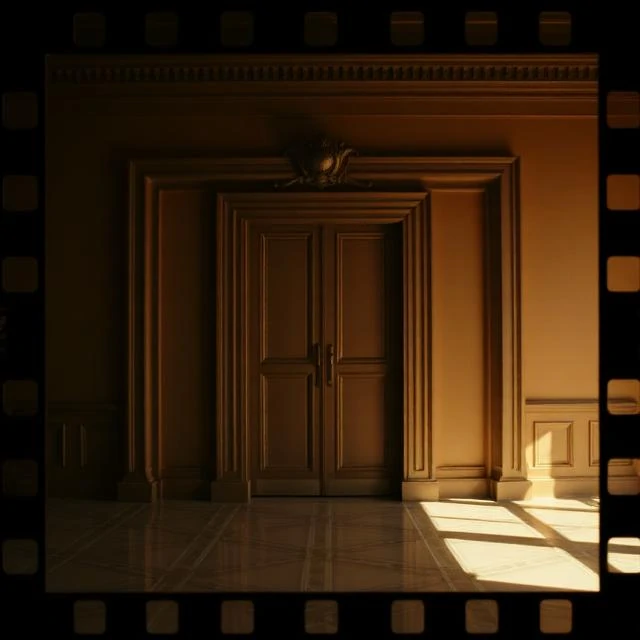
Mise-en-scène means placing on stage. In film, it refers to the arrangement of everything visible within the frame. It includes the set, the props, the lighting, the costumes, the makeup, the actors, and their movement. It is the visual world of the film. It is what the audience sees before a single cut is made. It is the director's canvas.
Mise-en-scène is a way of thinking about film. It emphasizes the composition of the frame over the editing. A film with a strong mise-en-scène uses the frame to tell the story. It uses color, texture, and space to create meaning. It uses the position of actors to show relationships. It uses props to reveal character. It uses lighting to set mood. Everything in the frame is a choice. Nothing is accidental.
The concept comes from theater, where the stage is set and the actors move within it. In film, the camera can move, but the principle is the same. The director arranges the elements of the scene to create a specific effect. Some directors are known for their meticulous mise-en-scène. Wes Anderson uses symmetrical compositions and pastel colors. Stanley Kubrick uses one-point perspective and precise geometry. Alfred Hitchcock uses framing to create suspense. Each has a distinctive visual style. Mise-en-scène is the language they speak.
Comments
No comments yet. Be the first to share a thought.
Leave a comment