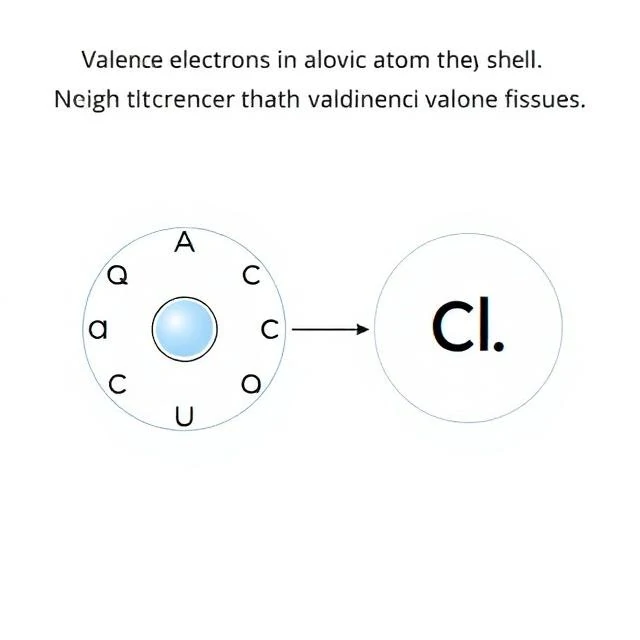
Sodium has one electron in its outermost shell. Chlorine has seven. Sodium gives its electron to chlorine. They form sodium chloride. The electrons in the outermost shell are valence electrons, and they determine how an atom bonds. They are the electrons involved in chemical reactions. The number of valence electrons determines an element's group in the periodic table and its chemical behavior.
Valence electrons occupy the highest principal energy level. For main-group elements, the number of valence electrons equals the group number for groups 1, 2, and 13 through 18, with some adjustments. Hydrogen and helium are exceptions. Helium has two valence electrons and is in group 18. The octet rule says that atoms tend to gain, lose, or share electrons to achieve eight valence electrons, the configuration of the noble gases. That rule explains much of chemical bonding.
Valence electrons determine oxidation states, reactivity, and bonding patterns. Metals lose valence electrons to form cations. Nonmetals gain or share electrons to form anions or covalent bonds. The number of valence electrons also determines the number of bonds an atom can form. Carbon has four valence electrons and forms four bonds. Nitrogen has five and forms three. Oxygen has six and forms two.
The concept is simple, but it explains a great deal. The periodic table is organized around valence electron configurations. Chemical reactivity follows from them. The valence electron is the key to understanding chemistry.
Comments
No comments yet. Be the first to share a thought.
Leave a comment