A fine-grained soil that retains water but drains poorly.
🧱
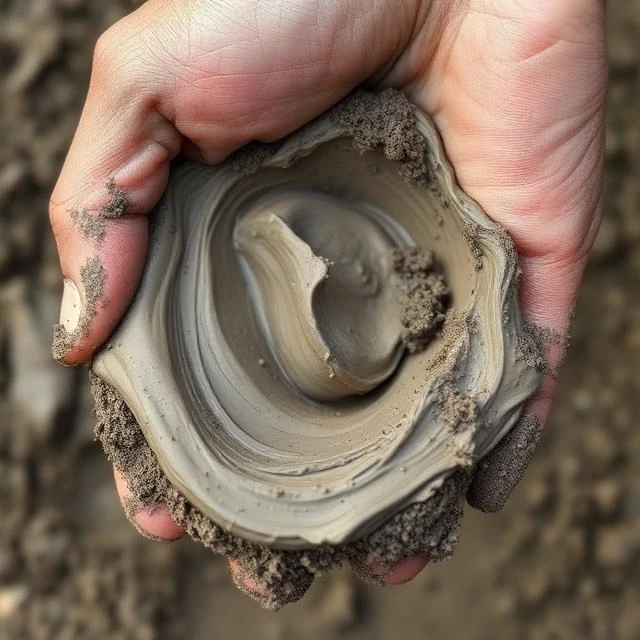
Clay is a fine-grained natural soil material composed primarily of hydrous aluminium phyllosilicates, with particle sizes below 0.002 millimetres. It forms through the weathering of feldspar-bearing rocks over long periods. Clay minerals include kaolinite, montmorillonite, and illite, each with different swelling and cation-exchange properties. In agriculture, clay soils are valued for their high nutrient-holding capacity and water retention but are criticised for poor drainage, heaviness, and tendency to compact. They warm slowly in spring, can waterlog in wet seasons, and crack in dry ones. Farmers manage clay soils with organic matter, gypsum, deep ripping, raised beds, and careful timing of tillage to avoid structural damage. Clay is also used in pottery, bricks, ceramics, and as a building material. Its plasticity when wet and hardness when fired have made it central to human civilisation, from ancient Mesopotamian tablets to modern engineered liners for ponds and landfills.
Comments
No comments yet. Be the first to share a thought.
Leave a comment