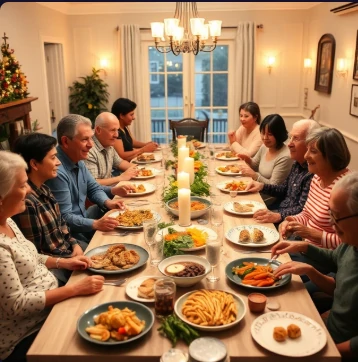
In many parts of the world, the household includes grandparents, aunts, uncles, and cousins. This is the extended family: a family unit that goes beyond the nuclear unit of parents and children. It can be based on blood ties, marriage, or adoption, and it often provides economic and emotional support that nuclear families cannot.
Extended families are common in agrarian societies where land and labor are shared. They also appear in urban settings among immigrant communities and in response to economic hardship. In the U.S., multigenerational households have grown since the 1980s, driven by immigration, housing costs, and caregiving needs.
Variations
- Patrilocal: couple lives with or near the husband's family
- Matrilocal: couple lives with or near the wife's family
- Neolocal: couple establishes a separate household
- Joint family: brothers and their families share a home
Extended families can be a safety net. They can also create obligations and conflicts over money, childcare, and authority.
Comments
No comments yet. Be the first to share a thought.
Leave a comment