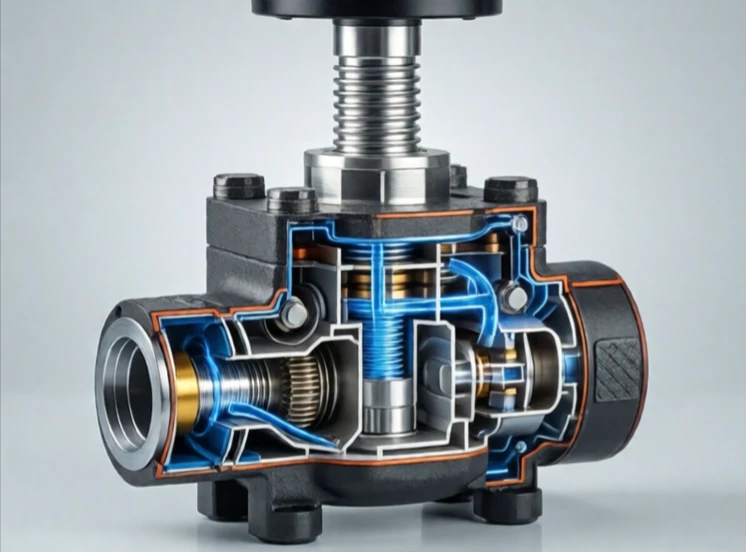
A hydraulic actuator uses pressurized fluid to produce force. Push fluid into a cylinder and the piston moves. The force can be enormous. Hydraulics power excavators, bulldozers, and the giant arms of industrial robots. They are also used in some humanoid robots and exoskeletons where high force density matters.
The basic system includes a pump, a reservoir, valves, and a cylinder or motor. The pump pressurizes the fluid. Valves direct it to one side of the piston or the other. The fluid pushes the piston, creating linear motion. A hydraulic motor produces rotary motion. Pressure relief valves prevent overloading.
Hydraulic actuator characteristics
- High force in a compact package.
- Fast response with high power density.
- Fluid leaks and maintenance are common issues.
- Efficiency is lower than electric systems.
- Precise control requires servo valves and feedback.
Hydraulics dominate heavy equipment because nothing else packs the same punch. A hydraulic cylinder the size of your arm can lift a car. Electric motors of the same size cannot. But hydraulics are messy. Hoses leak. Fluid gets hot. Pumps are noisy. In robotics, hydraulics are used where force density is critical, like Boston Dynamics' early Atlas and BigDog. Newer versions have moved to electric actuators for cleaner operation and better efficiency. Hydraulics are not going away, but they are sharing the stage with electric alternatives that are improving every year.
Comments
No comments yet. Be the first to share a thought.
Leave a comment