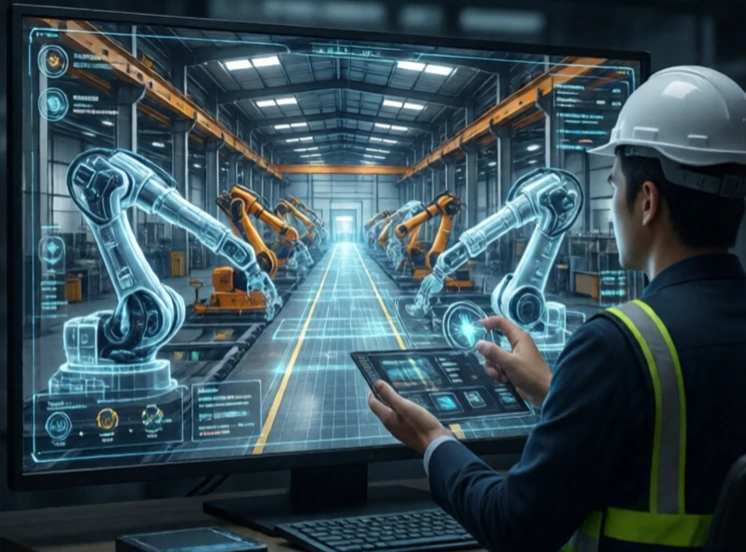
A digital twin is a virtual replica of a physical robot or system. It mirrors the real thing in real time, using sensor data to stay synchronized. Engineers use it to monitor performance, predict failures, and test changes without touching the physical asset.
The concept grew out of NASA's Apollo program, where ground crews kept physical duplicates of spacecraft to troubleshoot problems. The term digital twin was coined in 2002 by Michael Grieves. Today it applies to jet engines, wind turbines, factory lines, and robots. A robot digital twin includes geometry, kinematics, dynamics, and control logic.
What digital twins are used for
- Predictive maintenance: predict failures before they happen.
- Simulation: test new paths or payloads without risk.
- Remote monitoring: see what the robot is doing from anywhere.
- Training: teach operators in a virtual environment.
- Optimization: tune performance based on real data.
A digital twin is only as good as its data connection. If sensor updates lag or drop out, the twin drifts from reality. High-fidelity twins require significant computing power and careful calibration. The payoff is visibility. A factory manager can see every robot's health at a glance. An engineer can simulate a change and know whether it will work before committing. The digital twin is not a replacement for the physical robot. It is a companion that makes the physical robot smarter, safer, and easier to manage.
Comments
No comments yet. Be the first to share a thought.
Leave a comment