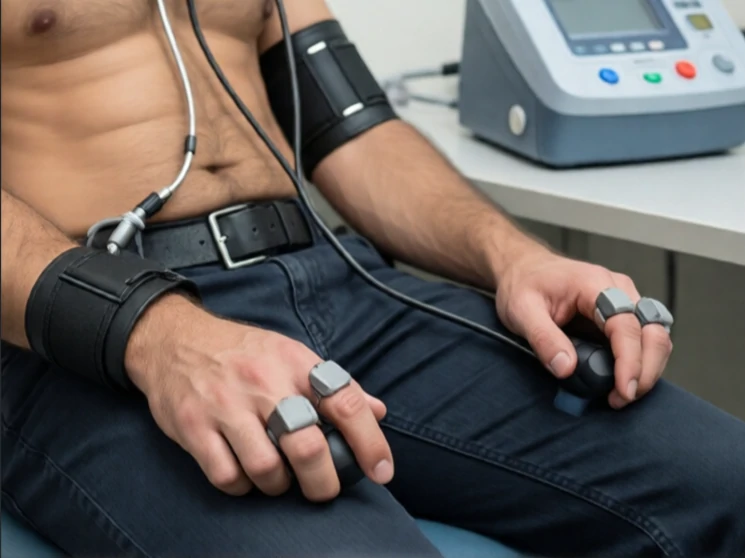
A polygraph is a machine that records several physiological channels—typically heart rate, blood pressure, respiration, and skin conductance—while a person answers questions. It is commonly used in attempts to detect deception.
The assumption is that lying produces measurable signs of arousal that differ from the responses given when telling the truth. In practice the instrument records arousal, not lying itself. Innocent people may show strong reactions because of anxiety about the situation; guilty people may remain calm if they are practiced or emotionally unreactive. Control-question and guilty-knowledge techniques attempt to improve discrimination, yet error rates remain substantial.
Most scientific reviews conclude that polygraph evidence is not sufficiently reliable for courtroom use. The machine continues to be employed in some employment screening and investigative settings, where the consequences of error are weighed differently. Newer methods that examine brain activity directly are under investigation but have not yet replaced the traditional polygraph.
The polygraph measures bodily reactions. Inferring truth or falsehood from those reactions remains an uncertain step.
Comments
No comments yet. Be the first to share a thought.
Leave a comment