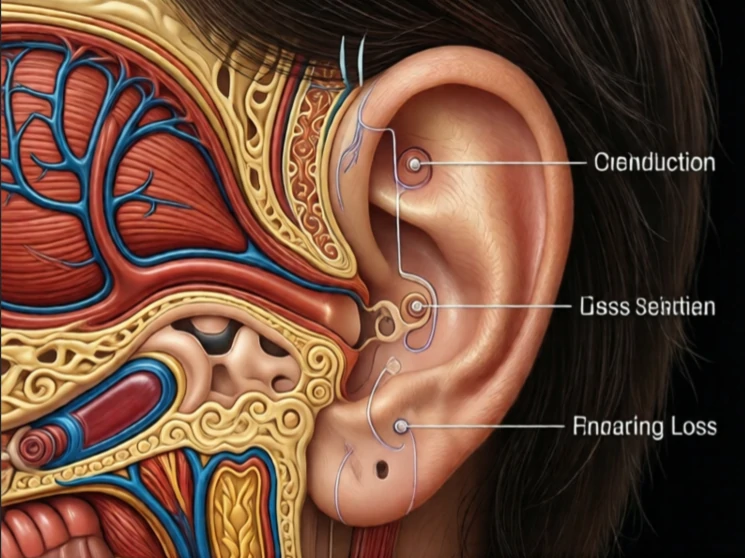
Conduction hearing loss is caused by a problem in the mechanical system that conducts sound waves to the cochlea. The inner ear and auditory nerve may be intact, yet the vibration never reaches them with normal strength.
Common causes include blockage of the ear canal by wax, perforation of the eardrum, fluid in the middle ear from infection, or fixation of the middle-ear bones by otosclerosis. The loss is often partial and may affect some frequencies more than others. Because the cochlea itself still functions, bone-conduction pathways—vibration transmitted through the skull—can still stimulate hearing. This fact is the basis of the classic tuning-fork tests that distinguish conduction loss from sensorineural loss.
Many forms of conduction hearing loss are medically or surgically treatable. Removal of wax, antibiotics for infection, or microsurgery to repair the ossicular chain can restore hearing. Hearing aids that amplify sound are also effective when the loss cannot be fully corrected.
When sound is blocked on its way inward, the result is conduction hearing loss. The machinery of hearing is intact; the delivery system is not.
Comments
No comments yet. Be the first to share a thought.
Leave a comment