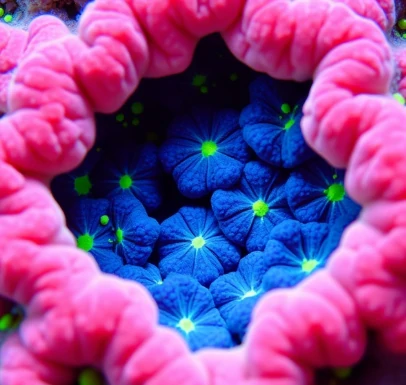
Inside the tissues of many corals, giant clams, and anemones live single-celled algae known as zooxanthellae. These dinoflagellates perform photosynthesis and pass a large fraction of the resulting organic compounds to their animal host, which in return provides protection and access to nutrients in otherwise nutrient-poor tropical waters.
The partnership is the foundation of coral-reef productivity. Zooxanthellae also contribute to the vivid colors of healthy corals. When corals are stressed by heat or other factors, they may expel their zooxanthellae and bleach, losing both color and their main energy source. Different genetic types of zooxanthellae confer varying degrees of heat tolerance, a fact that underlies some strategies for reef restoration.
The relationship is an obligate symbiosis for reef-building corals in shallow water; without zooxanthellae they cannot deposit calcium carbonate fast enough to build reefs. Studying the diversity and physiology of these algae is central to understanding how reefs may respond to a warming ocean.
A single coral polyp can host millions of zooxanthellae cells within its tissue.
Comments
No comments yet. Be the first to share a thought.
Leave a comment