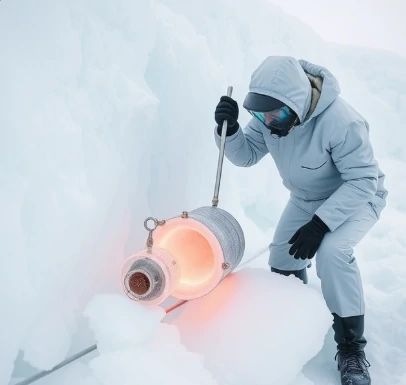
Direct weather records cover only the last century or two. Paleoclimatology extends the climate record backward through time by reading natural archives. Ice cores, tree rings, sediment layers, coral skeletons, and fossil pollen all preserve information about past temperature, precipitation, and atmospheric composition.
Scientists extract these proxies and calibrate them against modern measurements. The resulting reconstructions reveal ice ages, warm interglacial periods, and abrupt climate shifts that occurred long before human instruments existed. Greenhouse-gas concentrations from ice bubbles show that current levels are unprecedented in hundreds of thousands of years.
Paleoclimate data test the ability of climate models to simulate conditions different from today’s. They also provide context for judging how unusual recent changes are. The field combines geology, chemistry, biology, and atmospheric science.
- Studies ancient climates via natural archives
- Uses ice cores, tree rings, sediments
- Reconstructs temperature and greenhouse gases
- Provides long-term context for modern change
Comments
No comments yet. Be the first to share a thought.
Leave a comment