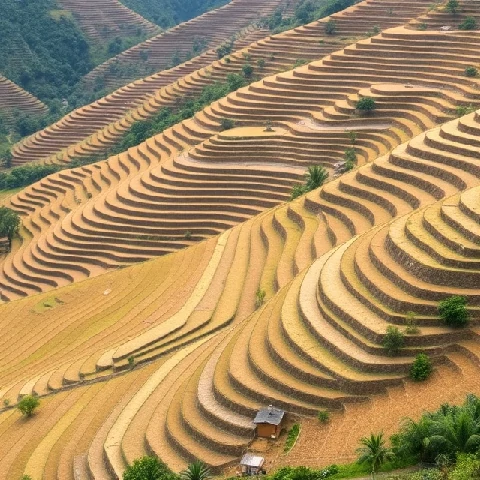
Look closely at any inhabited place and the marks of human decisions appear. A cultural landscape is the visible result of people interacting with their natural environment over time. Fields, roads, buildings, terraces, and sacred sites all form part of it.
Rice terraces in Southeast Asia, hedge-lined fields in Europe, and adobe settlements in the American Southwest are distinctive cultural landscapes. They reflect available materials, technological knowledge, social organization, and aesthetic values. UNESCO recognizes outstanding examples as World Heritage sites.
Cultural landscapes continue to change. New crops, machines, and planning ideals overwrite older patterns. Reading these landscapes helps geographers and historians reconstruct past ways of life and understand present-day identity. The land itself becomes a document.
- Visible human imprint on the natural environment
- Includes fields, settlements, and infrastructure
- Reflects culture, technology, and history
- Can be protected for its heritage value
Comments
No comments yet. Be the first to share a thought.
Leave a comment