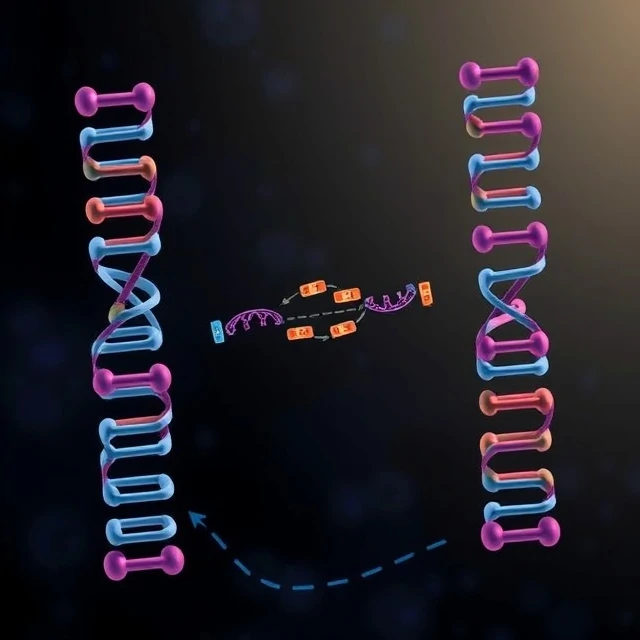
Chromosomes do not pass unchanged from parent to offspring. Recombination rearranges genetic material, most often through crossing over between homologous chromosomes during meiosis. The exchange creates new combinations of alleles on the same chromosome.
Physical breakage and rejoining occur at chiasmata. The farther apart two loci sit, the more likely a crossover will occur between them; this relationship allows construction of genetic maps. Recombination also helps chromosomes segregate properly by holding homologs together until anaphase.
Errors in recombination can produce deletions, duplications, or translocations. In the immune system, specialized recombination assembles diverse antibody genes. The process is therefore both a source of diversity and a potential cause of genomic instability.
- Rearrangement of genetic material
- Primarily occurs via crossing over in meiosis
- Generates new allele combinations
- Essential for genetic mapping and diversity
Comments (2)
Leave a comment