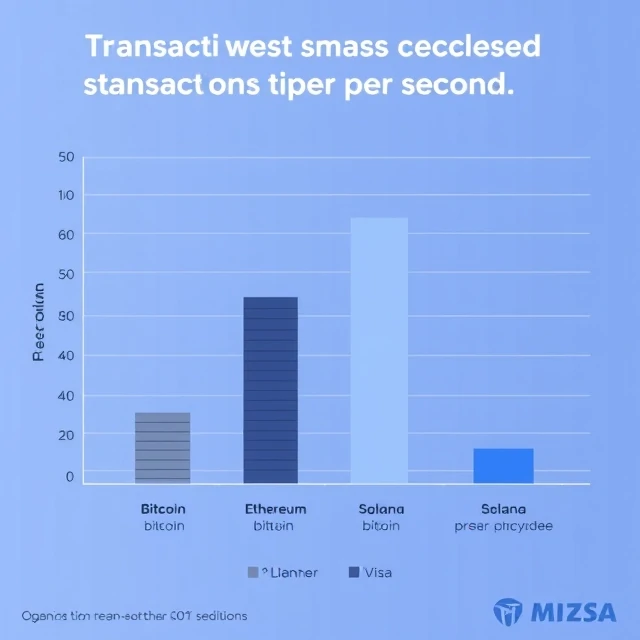
Scalability is a blockchain's ability to handle more transactions as demand grows. Bitcoin processes about 7 transactions per second. Ethereum handles around 15. Visa processes tens of thousands. That gap is the scalability problem. When a chain gets busy, fees rise and users wait. If the chain cannot scale, it cannot serve as a payment network for the world. It becomes a settlement layer for the wealthy.
Solutions fall into two categories. Layer 1 scaling changes the base protocol: bigger blocks, sharding, or faster consensus. Layer 2 scaling builds on top: rollups, sidechains, and state channels. Each approach has trade-offs. Bigger blocks increase throughput but make it harder to run a node, which hurts decentralization. Sharding splits the chain into pieces, which adds complexity and new security assumptions. Rollups move execution off-chain and settle on-chain, which preserves base-layer security but requires bridges. The scalability trilemma says you can optimize for two of three: scalability, security, and decentralization. Every design choice picks a corner.
Scalability approaches
- Bigger blocks — more throughput, fewer nodes
- Sharding — parallel processing, complex coordination
- Rollups — off-chain execution, on-chain settlement
- Sidechains — independent chains with their own consensus
No blockchain scales infinitely. The question is where the bottlenecks move and who bears the cost.
Comments
No comments yet. Be the first to share a thought.
Leave a comment