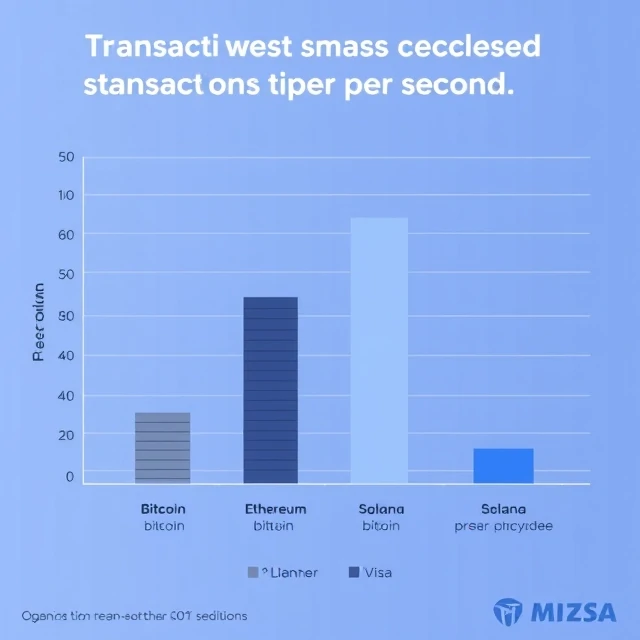
Η επεκτασιμότητα είναι η ικανότητα ενός blockchain να χειρίζεται περισσότερες συναλλαγές καθώς αυξάνεται η ζήτηση. Το Bitcoin επεξεργάζεται περίπου 7 συναλλαγές ανά δευτερόλεπτο. Το Ethereum χειρίζεται περίπου 15. Η Visa επεξεργάζεται δεκάδες χιλιάδες. Αυτό το κενό είναι το πρόβλημα της επεκτασιμότητας. Όταν μια αλυσίδα γίνεται πολυάσχολη, οι χρεώσεις αυξάνονται και οι χρήστες περιμένουν. Εάν η αλυσίδα δεν μπορεί να επεκταθεί, δεν μπορεί να χρησιμεύσει ως δίκτυο πληρωμών για τον κόσμο. Γίνεται ένα επίπεδο διακανονισμού για τους πλούσιους.
Solutions fall into two categories. Layer 1 scaling changes the base protocol: bigger blocks, sharding, or faster consensus. Layer 2 scaling builds on top: rollups, sidechains, and state channels. Each approach has trade-offs. Bigger blocks increase throughput but make it harder to run a node, which hurts decentralization. Sharding splits the chain into pieces, which adds complexity and new security assumptions. Rollups move execution off-chain and settle on-chain, which preserves base-layer security but requires bridges. The scalability trilemma says you can optimize for two of three: scalability, security, and decentralization. Every design choice picks a corner.
Scalability approaches
- Bigger blocks — more throughput, fewer nodes
- Sharding — parallel processing, complex coordination
- Rollups — off-chain execution, on-chain settlement
- Sidechains — independent chains with their own consensus
No blockchain scales infinitely. The question is where the bottlenecks move and who bears the cost.
Comments
No comments yet. Be the first to share a thought.
Leave a comment