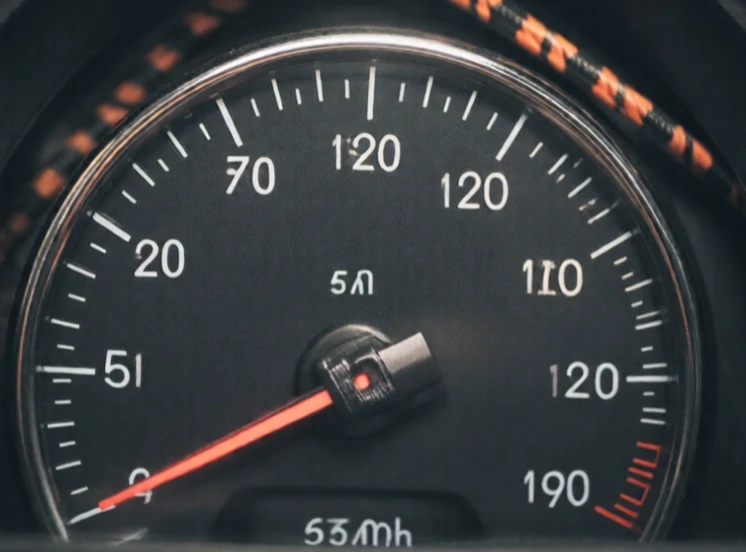
A speedometer tells the driver how fast the vehicle is moving. It sounds simple. Keeping it accurate is not. Tire size, gear ratios, and final drive all affect the reading.
Early speedometers were mechanical. A cable spun by the transmission drove a magnet inside a cup, and the drag moved a needle. That design dominated for most of the twentieth century. Electronic speedometers now take a signal from a vehicle speed sensor and display it on a stepper motor gauge or a digital screen.
Why speedometers read fast
- Manufacturers build in a small positive error to avoid liability.
- European rules require speedometers never to under-read.
- Worn tires have a smaller diameter, which increases the reading.
- Aftermarket wheel sizes can throw the calibration off.
GPS apps often show a lower speed than the dashboard. That is normal, not a malfunction. A speedometer that reads zero while driving, or flicks wildly, usually points to a bad speed sensor or a broken cable. In most places, an inoperative speedometer is an inspection failure.
Comments
No comments yet. Be the first to share a thought.
Leave a comment