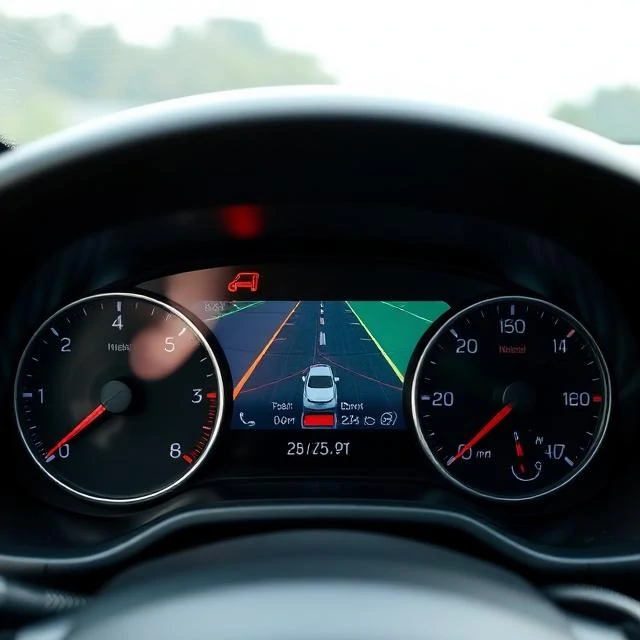
A collision avoidance system watches the road ahead and helps prevent crashes. It uses radar, cameras, or lidar to detect obstacles, and it warns the driver or intervenes automatically. The goal is to buy time, either by alerting a distracted driver or by applying the brakes when a crash is imminent.
The features vary by manufacturer. Forward collision warning sounds an alert when you are closing on a car too quickly. Automatic emergency braking applies the brakes if you do not respond. Adaptive cruise control maintains a set distance from the car ahead. Blind spot monitoring warns of vehicles in adjacent lanes. Rear cross-traffic alert warns of cars approaching from the side when you back out of a parking space.
The systems are not perfect. They can be fooled by bad weather, sharp curves, or unusual objects. They may brake for shadows or fail to detect a motorcycle. Drivers sometimes disable them because the warnings are annoying. But the data is clear: automatic emergency braking reduces rear-end crashes significantly. The Insurance Institute for Highway Safety estimates it cuts them by about half.
Regulators have taken notice. In the United States, automatic emergency braking will be required on all new cars by 2029. The technology is moving from luxury to standard equipment.
Comments
No comments yet. Be the first to share a thought.
Leave a comment