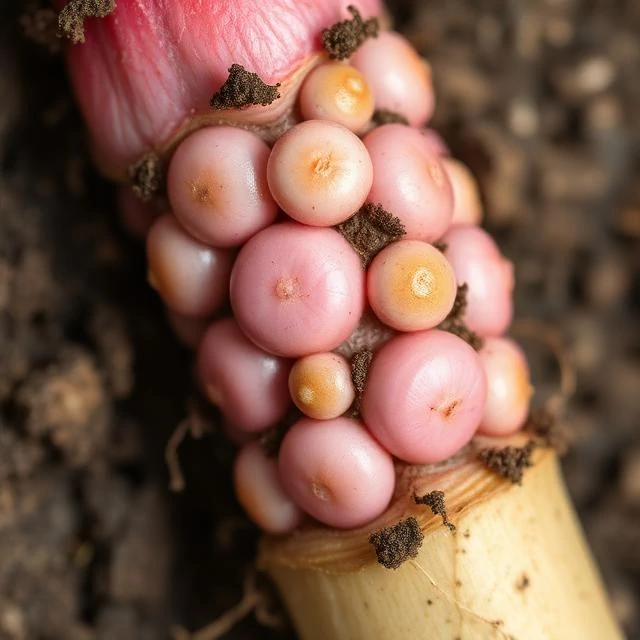
Nitrogen is the nutrient plants need in the largest quantity. It is a building block of proteins, chlorophyll, and DNA. A crop short on nitrogen turns pale green, then yellow, and grows slowly. A crop with enough is dark and vigorous.
The atmosphere is 78 percent nitrogen gas, but most plants cannot use it in that form. Only legumes, through their bacterial partners, can fix it directly. Everyone else depends on nitrogen already in the soil, on mineral fertiliser, or on organic matter that releases it slowly. The Haber-Bosch process, developed in Germany in the early 20th century, made synthetic nitrogen fertiliser possible at industrial scale and reshaped global agriculture.
Where nitrogen comes from
- Synthetic fertiliser: urea, ammonium nitrate, and others
- Manure and compost
- Legume rotation and green manure crops
- Soil organic matter mineralisation
Nitrogen is also a pollutant. Nitrate leaches into groundwater, nitrous oxide is a potent greenhouse gas, and runoff fuels algal blooms. Matching supply to crop demand is the central challenge of nutrient management.
Comments
No comments yet. Be the first to share a thought.
Leave a comment