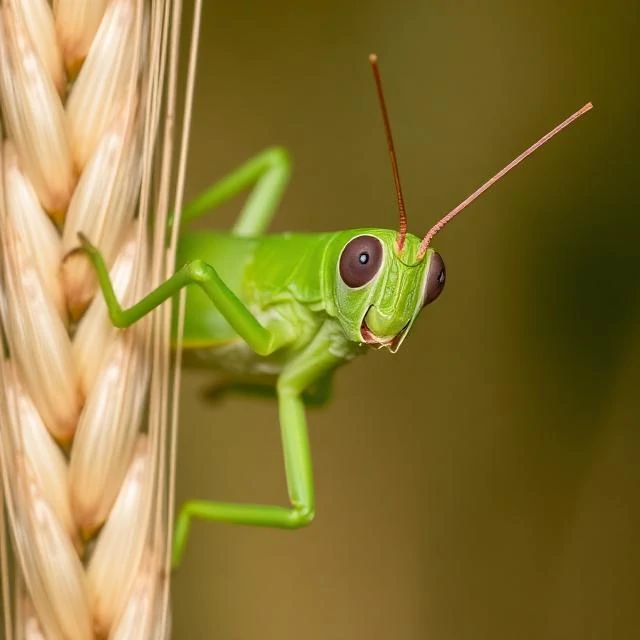
Grasshoppers are chewing insects with big hind legs built for jumping. Most species are harmless, but a few can strip a field in days. The worst are the locusts, which change behaviour under crowding and form swarms that darken the sky.
Outbreaks are tied to weather. Warm, dry springs favour survival, and drought concentrates vegetation into patches where hoppers gather. The desert locust, which breeds across North Africa and the Middle East, is monitored by the FAO because a single swarm can eat as much grain as a small city in a day.
Control options
- Biological: Nosema locustae and fungal pathogens
- Natural predators: birds, lizards, parasitic flies
- Chemical: insecticides used in outbreak conditions
- Cultural: tillage and crop diversity to reduce egg-laying sites
Grasshoppers also feed wildlife and help cycle nutrients in grasslands. The goal is rarely eradication, just keeping numbers below the level where crops suffer.
Comments (3)
Leave a comment