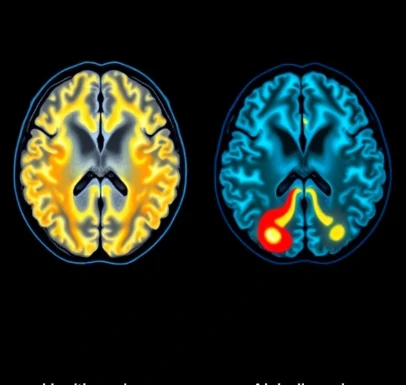
Memory lapses that begin as occasional forgetfulness can progress over years into profound loss of identity and independence. Alzheimer’s disease is the most common cause of that decline. Microscopic hallmarks include extracellular amyloid plaques and intracellular neurofibrillary tangles of tau protein.
Neurons in the hippocampus and association cortices degenerate, disrupting circuits required for new learning and later for language, spatial orientation, and judgment. Early symptoms often involve difficulty forming recent memories; later stages affect almost every cognitive domain and eventually motor function.
Age is the strongest risk factor, yet genetics, vascular health, and lifestyle also contribute. No cure exists, but some medications modestly slow symptom progression by boosting acetylcholine or targeting amyloid. Research continues into earlier detection through biomarkers and into therapies that might alter the underlying pathology.
- Progressive loss of memory and cognition
- Marked by plaques and tangles
- Begins in medial temporal regions
- No disease-modifying treatment yet approved
Comments
No comments yet. Be the first to share a thought.
Leave a comment