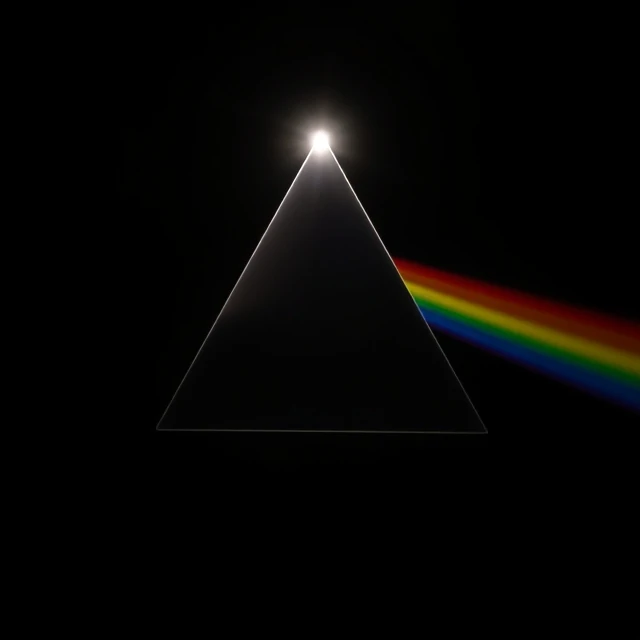
Light is electromagnetic radiation visible to the human eye. It travels at 299,792,458 meters per second in a vacuum, the fastest speed possible in the universe. Light behaves as both a wave and a particle. As a wave, it has wavelength and frequency. As a particle, it comes in discrete packets called photons. The energy of a photon depends on its frequency. Higher frequency means more energy. That is why ultraviolet light can damage skin and gamma rays can damage DNA.
Light interacts with matter in several ways. It can be reflected, refracted, absorbed, or transmitted. Reflection is why you see yourself in a mirror. Refraction is why a straw looks bent in a glass of water. Absorption is why a black shirt gets hot in the sun. Transmission is why light passes through glass. Light is also responsible for color. An object appears red because it reflects red light and absorbs other wavelengths. The human eye detects light through specialized cells called rods and cones. Rods are sensitive to brightness. Cones are sensitive to color. Light is essential to life on Earth, powering photosynthesis and driving the climate.
Light facts
- Speed. 299,792,458 m/s in vacuum.
- Wave-particle duality. Behaves as both wave and particle.
- Photon. Particle of light.
- Visible spectrum. 400 to 700 nanometers.
- Interactions. Reflection, refraction, absorption, transmission.
Light is not the same as sound. Light travels through a vacuum. Sound needs a medium.
Comments
No comments yet. Be the first to share a thought.
Leave a comment