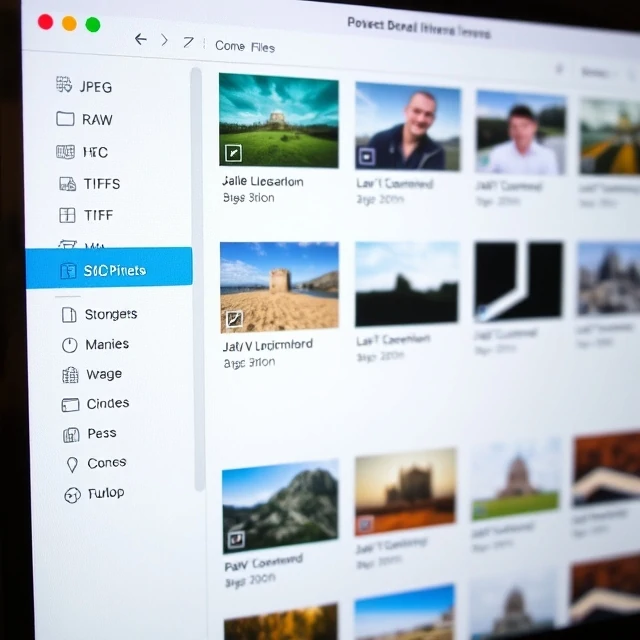
A file format is the way image data is stored. It determines how the image is compressed, how much data is retained, and what software can open it. The two most common formats in photography are JPEG and RAW. JPEG is compressed and processed. The camera applies sharpening, contrast, and color adjustments, then discards data to make the file smaller. RAW is uncompressed and unprocessed. It contains all the data the sensor captured, and it requires processing in software before it can be shared or printed.
Each format has trade-offs. JPEG files are smaller and can be used immediately. RAW files are larger and require more work, but they offer more flexibility in editing. Other formats include TIFF, which is uncompressed and often used for printing, and PNG, which is lossless and used for graphics. DNG is a universal RAW format developed by Adobe. HEIF is a newer format that offers better compression than JPEG. The choice of format depends on the workflow. A photojournalist might shoot JPEG for speed. A landscape photographer might shoot RAW for maximum quality.
Common image formats
- JPEG. Compressed, processed, universal.
- RAW. Uncompressed, unprocessed, flexible.
- TIFF. Lossless, large, used for printing.
- PNG. Lossless, used for graphics and web.
- DNG. Universal RAW format.
File format is not just a technical detail. It shapes what you can do with an image after you press the shutter.
Comments
No comments yet. Be the first to share a thought.
Leave a comment